Last Updated: September 2026
If your car insurance bill has increased, you’re not alone. Insurance premiums can change because of your driving record, vehicle, location, claims history, coverage choices, and other factors.
The good news is that you may have several ways to lower your car insurance premium without giving up the protection you actually need.
The most effective approach is usually to compare quotes, look for discounts, review your coverage, and make sure your policy still matches your current situation.
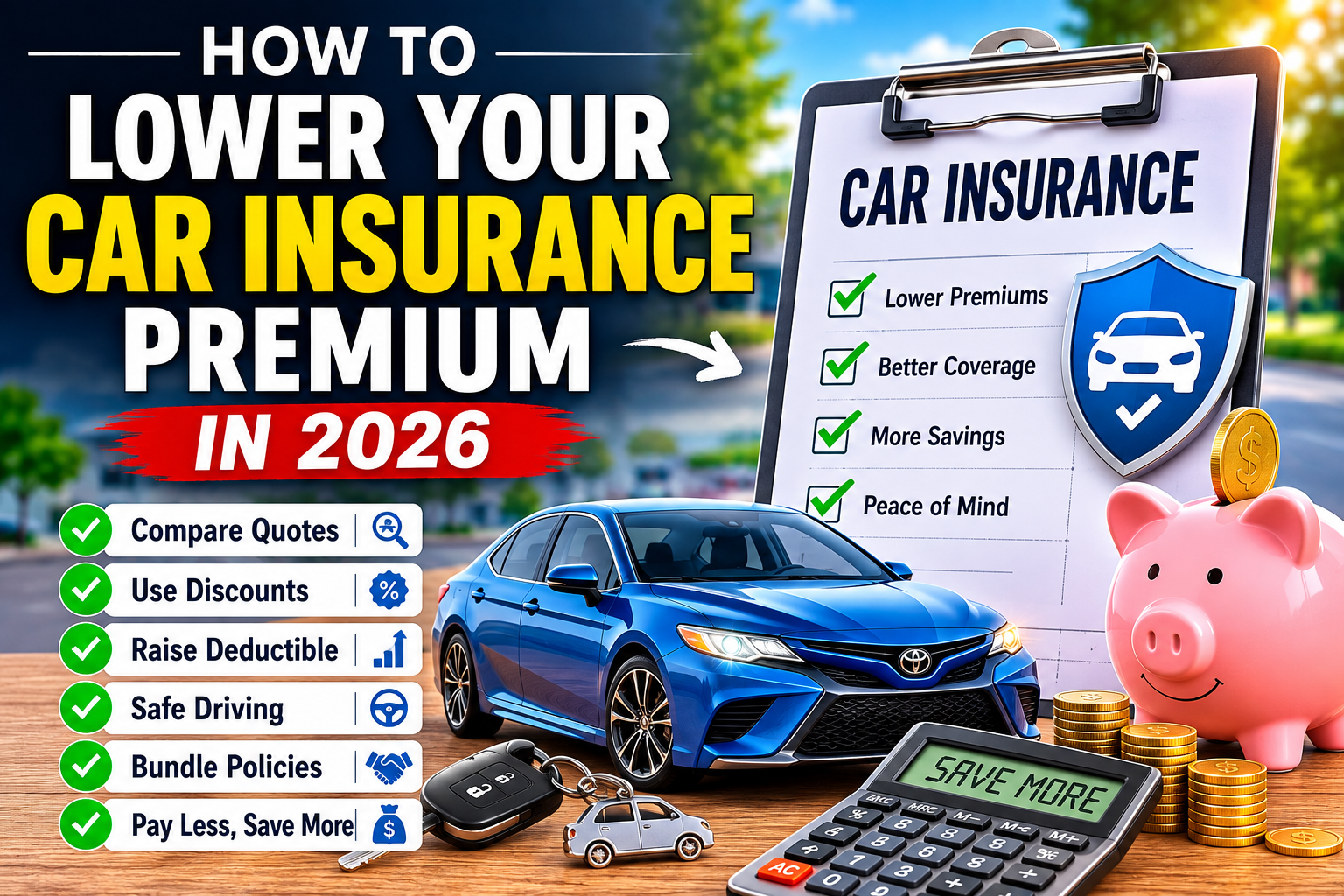
Here are 15 practical ways to potentially save money on car insurance in 2026.
1. Compare Car Insurance Quotes
One of the simplest ways to potentially lower your premium is to shop around.
Insurance companies use different pricing models, so the same driver can receive very different quotes from different insurers.
The Insurance Information Institute recommends getting multiple price quotes when shopping for auto insurance.
When comparing quotes, make sure you’re comparing similar policies.
Check that each quote has comparable:
- Liability limits
- Comprehensive coverage
- Collision coverage
- Deductibles
- Uninsured motorist coverage
- Optional coverage
A quote that looks cheaper may simply provide less coverage.
How often should you compare car insurance?
You don’t necessarily have to change insurers every year. However, it can be useful to compare rates before renewal, particularly after a major change such as moving, buying a vehicle, adding a driver, or experiencing a significant change in your driving record.
2. Ask Your Insurance Company About Every Available Discount
Many drivers qualify for discounts without realizing it.
Depending on the insurer and your state, discounts may be available for:
- Safe driving
- Multiple vehicles
- Bundling policies
- Defensive driving
- Good grades
- Vehicle safety equipment
- Anti-theft devices
- Low annual mileage
- Paying the policy in full
- Certain professional or organizational affiliations
The exact discounts vary by company and state. The key is to ask your insurer to review every discount you’re currently eligible for.
Don’t assume a company offering more discounts will automatically be cheaper. The final premium matters more than the number of discounts advertised.
3. Consider Bundling Your Insurance Policies
If you have multiple insurance policies, ask whether combining them with one insurer could reduce your overall cost.
For example, you might be able to bundle:
- Auto insurance
- Homeowners insurance
- Renters insurance
- Motorcycle insurance
- Other eligible policies
The Insurance Information Institute notes that many insurers offer discounts when customers purchase multiple types of insurance from the same company.
However, always compare the total cost.
A bundle isn’t automatically the cheapest option if another company offers significantly lower individual premiums.
4. Consider Raising Your Deductible
Your deductible is the amount you generally pay toward a covered claim before the insurer pays the remaining eligible amount.
A higher deductible can reduce your premium because you’re accepting more out-of-pocket responsibility.
For example, you might compare a:
- $500 deductible
- $1,000 deductible
The higher deductible could produce a lower premium.
But there’s an important trade-off.
If you choose a $1,000 deductible, you should be comfortable paying that amount if you have a qualifying claim.
The Insurance Information Institute notes that increasing an auto insurance deductible can reduce the cost of collision and comprehensive coverage.
Should you choose a $1,000 deductible?
There’s no universal answer.
A higher deductible can make sense if you have enough emergency savings to cover it.
If paying the deductible would create financial stress, the premium savings may not be worth the additional risk.
5. Take Advantage of Safe-Driving Programs
Some insurers offer usage-based insurance or telematics programs.
These programs can use information about your driving behavior to help determine your insurance rate or eligibility for discounts.
Depending on the program, data may include things such as:
- Mileage
- Braking
- Acceleration
- Time of day you drive
- Phone-related driving behavior
- Other driving patterns
The Insurance Information Institute describes telematics as technology insurers can use to evaluate driving behavior and potentially tailor rates. Participation is generally voluntary, although program details vary.
Is telematics worth it?
It can be worth considering if you are a consistently safe driver.
However, understand what information the program collects and how your insurer uses it before enrolling.
6. Maintain a Clean Driving Record
Your driving history can have a major influence on your insurance premium.
Speeding tickets, at-fault accidents and other moving violations may result in higher premiums depending on your insurer and state.
Progressive’s current 2026 guidance notes that moving violations can increase insurance rates, although the impact depends on the violation, insurer and state.
The best long-term strategy is simple:
Drive safely and avoid unnecessary tickets and accidents.
A clean driving record can also make you eligible for safe-driver discounts with some insurers.
7. Take a Defensive Driving Course
Some insurance companies offer discounts to drivers who complete an approved defensive driving course.
The exact requirements vary by state and insurer.
Before paying for a course, ask your insurance company:
- Whether it offers a defensive-driving discount
- Which courses qualify
- How much the discount could be
- How long the discount lasts
This prevents you from spending money on a course that doesn’t qualify for a discount.
8. Review Your Coverage Every Year
Your insurance needs can change over time.
For example, you might:
- Pay off your car loan
- Buy an older vehicle
- Drive fewer miles
- Move to another state
- Add or remove a driver
- Change how you use your vehicle
- Buy a second vehicle
Review your policy at renewal to make sure you’re not paying for coverage you no longer need.
However, don’t remove important coverage simply to reduce your monthly bill.
The goal is to find the right balance between affordable premiums and adequate protection.
9. Reconsider Comprehensive and Collision Coverage on an Older Car
Comprehensive and collision coverage can be valuable for newer or higher-value vehicles.
But as a vehicle gets older, you may want to reconsider whether the cost of certain optional coverage still makes financial sense.
The Insurance Information Institute recommends reviewing collision and comprehensive coverage on older vehicles and considering the vehicle’s value when making that decision.
Before dropping coverage, consider:
- Your vehicle’s current market value
- Your annual premium for the coverage
- Your deductible
- Whether you could afford to replace the vehicle
- Whether your lender requires certain coverage
If your car is financed or leased, the lender may require collision and comprehensive coverage.
10. Drive Fewer Miles If Possible
Some insurers offer discounts for low-mileage drivers.
If you work from home, use public transportation, carpool, or simply don’t drive much, tell your insurer.
Your actual annual mileage can affect your insurance pricing with some companies.
The Insurance Information Institute lists low-mileage discounts as one potential way to reduce auto insurance costs.
Don’t underestimate this if your driving habits have changed significantly.
Someone who used to commute 50 miles every day but now works remotely may have a very different mileage profile.
11. Choose a Vehicle That Is Less Expensive to Insure
Insurance costs can vary significantly between vehicles.
Before buying your next car, consider insurance costs in addition to:
- Purchase price
- Fuel costs
- Maintenance
- Registration
- Financing
Insurers may consider factors such as repair costs, vehicle safety, theft risk and claims history when pricing coverage.
The Insurance Information Institute recommends checking insurance costs before purchasing a vehicle.
A cheaper car isn’t always cheaper to insure
Two vehicles with similar purchase prices can have very different insurance premiums.
Before buying, request insurance quotes for the specific make, model and year you’re considering.
12. Improve Your Credit Where Credit-Based Insurance Information Is Permitted
In states where insurers are permitted to use credit-based insurance information, your financial history may affect your insurance pricing.
The rules differ by state, so this isn’t something every driver can control or that every insurer can use in the same way.
Where applicable, maintaining healthy credit habits may help.
Consider:
- Paying bills on time
- Keeping credit balances manageable
- Checking your credit reports for errors
- Avoiding unnecessary new credit applications
The Insurance Information Institute notes that credit information is used by many insurers for pricing, although regulations vary.
13. Ask About Paying Your Premium in Full
Some insurers offer discounts or lower fees when you pay your premium in full rather than through monthly installments.
This varies by insurer.
If you have enough cash available, ask:
“Is there a discount for paying my policy in full?”
Also ask whether monthly payment plans include installment fees.
The goal is to compare the total annual cost, not just the monthly payment.
14. Remove Drivers or Vehicles You No Longer Need on the Policy
Your insurance premium can change when you add or remove drivers and vehicles.
If someone no longer lives in your household or no longer drives your insured vehicle, contact your insurer and ask whether your policy should be updated.
Similarly, if you’ve sold a vehicle, make sure your insurance information reflects the change.
Don’t remove someone from a policy simply because you want a lower rate if that person still regularly drives your vehicle or is required to be listed under your insurer’s rules.
15. Ask About Insurance Discounts for Safety and Anti-Theft Features
Safety and security features can sometimes qualify for insurance discounts.
Examples may include:
- Anti-lock brakes
- Airbags
- Anti-theft systems
- Other approved safety equipment
The availability and size of discounts vary by insurer and state.
Before purchasing an expensive aftermarket security device specifically for an insurance discount, confirm with your insurer that it qualifies and find out how much you could actually save.
How Much Can You Save by Lowering Your Car Insurance?
There’s no guaranteed amount.
Your savings depend on:
- Current premium
- Insurance company
- State
- Driving record
- Vehicle
- Coverage
- Deductible
- Discounts
- Mileage
- Claims history
For some drivers, shopping around can produce a meaningful difference.
For others, the biggest opportunity may come from changing coverage, increasing the deductible, qualifying for discounts, or improving their driving profile.
That’s why it’s better to compare personalized quotes than rely on a generic claim such as “you can save 40%.”
What Is the Fastest Way to Lower Car Insurance?
If you want to look for savings quickly, start with these five steps:
Step 1: Get quotes from several insurers
Don’t assume your current company is cheapest.
Step 2: Ask for a discount review
Tell the insurer to check all discounts available to you.
Step 3: Review your deductible
Compare the premium difference between your current deductible and a higher option.
Step 4: Review your coverage
Make sure your current policy still matches your vehicle and financial situation.
Step 5: Check your mileage
If you drive substantially less than before, update your insurer.
These steps can give you a clearer picture of where your biggest savings opportunities are.
Does Switching Car Insurance Save Money?
It can.
Insurance companies don’t all charge the same price for the same driver.
That’s why comparing multiple insurers can be useful.
However, don’t switch solely because a quote is cheaper.
Before changing companies, compare:
- Liability limits
- Deductibles
- Comprehensive coverage
- Collision coverage
- Uninsured motorist coverage
- Optional benefits
- Claims reputation
- Customer service
- Cancellation or payment terms
The cheapest quote isn’t necessarily the best value.
Should You Lower Your Coverage to Save Money?
Sometimes reducing optional coverage can lower your premium, but it can also increase your financial risk.
For example, dropping collision coverage could mean paying for covered damage to your own vehicle out of pocket after an accident.
Before reducing coverage, ask yourself:
“If something happened tomorrow, could I comfortably pay for the loss myself?”
If the answer is no, saving a small amount on premiums may not be worth the risk.
Should You Increase Your Deductible to $1,000?
A $1,000 deductible can reduce premiums compared with a lower deductible, but the exact savings vary.
The important question isn’t just:
“How much will I save?”
It’s also:
“Could I afford to pay $1,000 after a covered claim?”
If you have an emergency fund that can comfortably cover the deductible, the option may be worth considering.
If not, keeping a lower deductible may provide more financial flexibility.
How to Compare Car Insurance Quotes Correctly
One of the biggest mistakes people make is comparing different policies as if they’re identical.
Use this simple checklist.
Compare the same:
Liability limits
For example, don’t compare one quote with significantly higher liability limits against another with much lower limits and call the cheaper quote the winner.
Deductibles
Compare the same comprehensive and collision deductibles.
Coverage
Make sure both policies include similar protections.
Drivers
Use the same driver information.
Vehicles
Use the same vehicle information.
Mileage
Provide accurate annual mileage.
Once you’re comparing equivalent coverage, the price difference becomes much more meaningful.
Common Mistakes That Can Keep Your Insurance Premium High
Mistake #1: Staying with the same insurer forever
Loyalty doesn’t always guarantee the lowest rate.
Compare periodically.
Mistake #2: Looking only at monthly payments
A lower monthly payment can sometimes reflect a different payment schedule, coverage level or deductible.
Compare the total policy cost.
Mistake #3: Choosing the lowest coverage possible
Cheap insurance isn’t useful if it leaves you financially exposed after a serious accident.
Mistake #4: Ignoring available discounts
Ask for a full discount review.
Mistake #5: Raising the deductible without savings
A higher deductible only makes sense if you can afford it when you need to make a claim.
Mistake #6: Giving inaccurate information
Always provide accurate information about your address, mileage, drivers and vehicle use.
Misrepresenting information can create problems with your policy or claims.
A Simple Car Insurance Savings Checklist for 2026
Before your next renewal, ask:
☐ Have I compared at least three insurers?
☐ Did I ask about every available discount?
☐ Has my annual mileage changed?
☐ Has my driving record improved?
☐ Can I qualify for a safe-driving program?
☐ Would bundling policies reduce my total cost?
☐ Can I comfortably afford a higher deductible?
☐ Is my vehicle significantly older than when I purchased the policy?
☐ Do I still need every optional coverage?
☐ Are all drivers and vehicles on my policy still correct?
If you can answer these questions before renewal, you’ll have a much better idea of whether your current premium is competitive.
Frequently Asked Questions
How can I lower my car insurance premium?
Start by comparing multiple quotes, asking about discounts, reviewing your coverage, considering your deductible, maintaining a clean driving record, and checking whether you qualify for low-mileage or safe-driving programs.
What is the easiest way to save money on car insurance?
Shopping around and comparing equivalent policies is one of the simplest ways to find out whether you can get a better price.
Does increasing my deductible lower my insurance?
Generally, a higher deductible can reduce the premium for applicable coverage, but you’ll pay more out of pocket if you have a qualifying claim.
Does bundling home and auto insurance save money?
It can. Many insurers offer multi-policy discounts, but you should compare the total bundled price against separate policies.
Can a clean driving record lower my insurance?
A clean driving record can help you qualify for lower rates or safe-driver discounts with some insurers. The effect varies by company and state.
Does driving less lower car insurance?
It can. Some insurers offer low-mileage programs or discounts, so tell your insurer if your annual mileage has decreased significantly.
Is telematics worth trying?
It may be worth considering for drivers who consistently practice safe driving. Telematics programs can evaluate driving behavior and may offer savings depending on the insurer and program.
Should I switch car insurance companies to save money?
Potentially. Insurance prices vary between companies, so getting several quotes can reveal whether another insurer offers a better combination of price and coverage.
Final Thoughts
Lowering your car insurance premium doesn’t necessarily mean buying the cheapest policy you can find.
A better strategy is to shop around, maximize legitimate discounts, review your coverage, choose a deductible you can afford, and keep your insurer updated when your circumstances change.
Start with multiple quotes and compare them carefully using the same coverage limits and deductibles.
Even if you decide to stay with your current insurer, the comparison can help you understand whether you’re getting a competitive rate.
The goal isn’t simply to pay less. It’s to get the protection you need at a price that makes sense for your situation.